Understanding Fire Extinguisher Laws in New York
Fire extinguisher regulations in New York are designed to protect property and lives by ensuring that businesses are properly equipped to handle small fires before they escalate. Compliance is crucial, as failing to meet these regulations can result in hefty fines and, more importantly, increased risks during emergencies.
According to the New York City Fire Department (FDNY), they respond to over 27,000 structural fires annually, many of which involve commercial properties. Adequate fire prevention measures, including fire extinguishers, are often a first line of defense in these incidents.
Key Requirements for Fire Extinguishers in New York
To meet the fire safety regulations in New York, businesses must adhere to several key requirements. Here’s a breakdown of the most important fire extinguisher laws:
1. Placement and Accessibility
The FDNY requires that fire extinguishers be placed in easily accessible locations throughout commercial properties. They must be visible and reachable without any obstacles in the way. According to NFPA 10: Standard for Portable Fire Extinguishers, which New York adopts, extinguishers should be placed within 75 feet of travel distance for Class A hazards and 50 feet for Class B hazards.
- Data Insight: The National Fire Protection Association (NFPA) reports that 60% of small business fires can be contained with a portable fire extinguisher if properly positioned and accessible . This highlights the importance of proper placement in controlling fires quickly.
2. Monthly and Annual Inspections
How often should fire extinguishers be inspected?
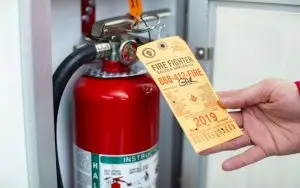
In New York, fire extinguishers must undergo regular inspections to ensure they remain in working condition. Business owners are required to perform monthly visual checks and keep a record of these inspections, verifying that the extinguishers are not damaged and are fully charged.
- Annual Certification: A licensed fire safety professional must perform an annual inspection of all fire extinguishers, tagging and certifying them upon completion. This process includes checking the pressure levels, ensuring there are no leaks, and verifying that the chemical contents are viable.
- Penalty for Non-Compliance: The FDNY imposes fines for failing to maintain properly inspected extinguishers. These fines can range from $300 to $1,000 per extinguisher, depending on the severity and frequency of violations .
3. Hydrostatic Testing Requirements
Hydrostatic testing is another critical component of fire extinguisher maintenance in New York. This involves pressurizing the extinguisher with water or another fluid to ensure that its shell can withstand high-pressure use without failing.
- Frequency: Portable fire extinguishers need to undergo hydrostatic testing every 5 to 12 years, depending on the type of extinguisher (e.g., dry chemical, CO2, water).
- Data Insight: A study by Fire & Life Safety America found that 5-10% of extinguishers fail hydrostatic testing due to cylinder degradation , emphasizing the need for this safety measure to prevent malfunction during emergencies .
4. Training Requirements for Employees
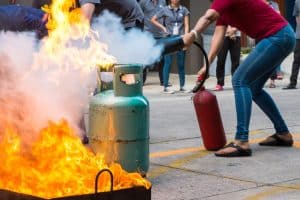
New York State law mandates that employees be trained in the proper use of fire extinguishers if they are expected to use them during an emergency. This training must cover basic fire extinguisher operation, types of fire extinguishers, and when to attempt to extinguish a fire versus evacuate.
- FDNY Recommendations: The FDNY suggests that businesses conduct fire extinguisher training sessions annually, especially in industries with high fire risks, like restaurants and manufacturing.
- Impact of Training: According to the U.S. Fire Administration, businesses with trained employees experience a 20% higher success rate in containing small fires using extinguishers compared to those without training .
5. Special Requirements for Residential Buildings
In New York City, additional regulations apply to residential buildings. For example, owners of buildings with three or more units must provide portable fire extinguishers in common areas, such as hallways and laundry rooms. These extinguishers must meet the same monthly and annual inspection standards as those in commercial spaces.
- Data Insight: A study by the New York State Division of Homeland Security and Emergency Services revealed that properly maintained fire extinguishers in residential buildings reduce property damage by an average of 25% during minor fires .
Common Compliance Issues and How to Avoid Them
Despite clear guidelines, many businesses still struggle with compliance. Here are a few common issues and tips to avoid them:
- Failure to Maintain Records: Many businesses neglect to document their monthly inspections, leading to fines during FDNY inspections. Maintaining a simple logbook or digital records can help.
- Expired Extinguishers: Forgetting to replace extinguishers that have reached their expiration date is a frequent oversight. According to a survey by Fire Safety New York, 15% of businesses in the state had expired fire extinguishers during routine safety audits . Setting up reminders for replacements can prevent this.
- Inadequate Training: Not providing employees with the necessary training can increase risks during a fire emergency. Even a brief annual training session can make a difference.
Why Compliance with Fire Extinguisher Laws Matters
The strict fire extinguisher laws in New York are there for a reason. They ensure that, like Tony in his diner, businesses can respond quickly and effectively to fire emergencies. According to the NFPA, using a fire extinguisher in the first few minutes of a fire can reduce the spread of flames by up to 80%, significantly minimizing damage and injuries.
Moreover, compliance isn’t just about avoiding fines—it’s about creating a safe environment for employees, customers, and residents. When businesses prioritize safety and adhere to fire extinguisher regulations, they not only protect their own assets but also contribute to the well-being of the broader community.
Fire extinguisher laws in New York are designed to save lives, reduce property damage, and create a safer environment for everyone. For business owners like Tony, understanding and adhering to these regulations is essential. It ensures that when a small fire sparks, it can be quickly extinguished before it grows out of control. By investing in regular inspections, employee training, and proper placement of extinguishers, businesses can be prepared for the unexpected—and avoid turning a quiet evening into a night to remember for all the wrong reasons.
Sources:
- New York City Fire Department (FDNY): Structural Fire Response Data, 2023.
- NFPA 10: Standard for Portable Fire Extinguishers.
- U.S. Occupational Safety and Health Administration (OSHA): Fire Extinguisher Compliance Guidelines.
- Fire & Life Safety America: Hydrostatic Testing Analysis, 2023.
- Fire Safety New York: Business Safety Compliance Survey, 2022.
- New York State Division of Homeland Security and Emergency Services: Fire Safety Report, 2023.
- U.S. Fire Administration: Impact of Fire Extinguisher Training on Fire Containment.